IVF & ICSI Cost in India 2026: Treatment Packages & Success Rates

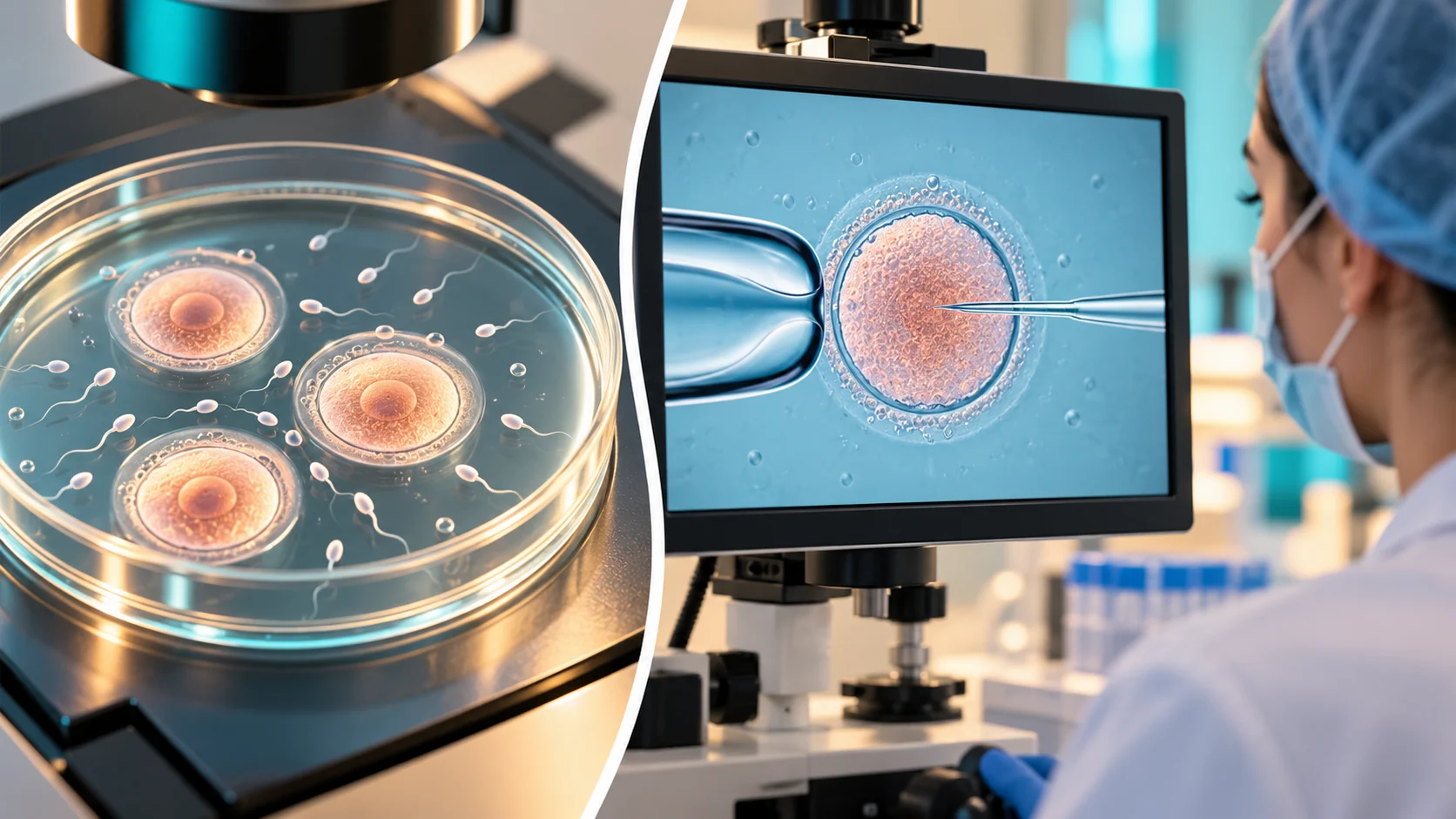
Illustration for explanation; not a photograph of a specific hospital or patient.
Table of contents
How much does IVF and ICSI cost in India?
A complete IVF and ICSI treatment cycle in India ranges from $3,200 to $4,500, including ovarian stimulation monitoring, ultrasound scans, ovum pickup under mild sedation, Intracytoplasmic Sperm Injection, and embryo transfer. This represents a 60% to 75% savings over Gulf and Western clinics, with clinical success rates adhering to global benchmarks.
| Procedure | Average Cost in India (USD) | Cost in Western/Gulf Clinics | Cost Savings |
|---|---|---|---|
| Standard ICSI Cycle | $3,200 - $3,800 | $8,000 - $12,000 | Up to 65% |
| ICSI with PGT-A Genetic Screening | $4,800 - $5,800 | $14,000 - $18,000 | Up to 70% |
| Embryo Freezing (1 Year) | $600 - $900 | $2,000 - $3,500 | Up to 75% |
| Surgical Sperm Retrieval (TESA/Micro-TESE) | $800 - $1,200 | $2,500 - $4,000 | Up to 70% |
The standard treatment package includes reproductive endocrinologist consultations, follicular monitoring ultrasounds, egg retrieval, sperm processing, blastocyst incubation in continuous time-lapse incubators, and ultrasound-guided embryo transfer.
What is the difference between IVF and ICSI?
The choice between classical IVF and ICSI depends upon comprehensive couple evaluation:
- Conventional In Vitro Fertilization (IVF): Eggs and thousands of sperm are incubated together in a culture dish for spontaneous fertilization. Recommended when semen parameters are completely normal and female tubal blockages are the primary cause of infertility.
- Intracytoplasmic Sperm Injection (ICSI): A single high-quality sperm is injected directly into each mature egg via micromanipulation needles. Ideal for severe male factor infertility (low motility, morphology, or count) and previous fertilization failure.
Genetic screening of embryos (PGD / PGT-A)
Leading fertility labs in New Delhi utilize advanced molecular genetic testing before embryo transfer:
- Monogenic Defect Screening (PGT-M): Analyzes embryo DNA to screen out inheritable familial genetic conditions like Thalassemia, Sickle Cell Anemia, and muscular dystrophies.
- Aneuploidy Screening (PGT-A): Evaluates all 24 chromosomes to exclude conditions such as Down syndrome, elevating implantation success and reducing early pregnancy loss rates.
Timeline and stages of an IVF treatment cycle in India
A full IVF/ICSI treatment protocol spans approximately 18 to 22 days in India through 4 structured steps:
- Stage 1: Ovarian Stimulation (Days 1–10): Initiated on Day 2 of the menstrual cycle using gonadotropin injections and serial follicular scans until follicles achieve mature diameters (18–20 mm).
- Stage 2: Ovum Retrieval & ICSI (Days 12–13): A brief 20-minute outpatient procedure under mild sedation to harvest oocytes, followed by immediate micromanipulation fertilization with prepared sperm.
- Stage 3: Blastocyst Culture & Transfer (Days 15–18): Embryos develop in benchtop incubators to Day 5 blastocyst stage before painless transfer into the uterine cavity.
- Stage 4: Pregnancy Confirmation (Day 14 Post-Transfer): Serum Beta-hCG blood test confirms clinical implantation.
IVF success rates in India by age group
Success rates predominantly depend upon female maternal age and embryo genetic quality:
- Under 35 years: Success rates range from 65% to 75% per transfer utilizing Day 5 blastocyst embryos.
- 35 to 40 years: Success rates achieve 50% to 60% with PGT-A chromosomal verification.
- Over 40 years: 30% to 45% clinical pregnancy rates per transfer, with dual-cycle embryo banking frequently recommended.
Frequently Asked Questions about IVF and ICSI in India
Clear answers from chief embryologists and fertility specialists:
The wife should plan an 18 to 21-day stay for ovarian stimulation and embryo transfer, whereas the husband needs to be present for only 2 to 3 days for semen collection.
Yes. Flying is completely safe 48 hours after embryo transfer. Clinical studies confirm that air travel and normal cabin pressure do not impact implantation.
Twin rates approximate 20% if two blastocysts are transferred. Elective Single Embryo Transfer (eSET) can be chosen to ensure a singleton pregnancy.
Yes. Advanced Micro-TESE surgical testicular sperm extraction is routinely performed with high retrieval rates for subsequent ICSI.
Stimulation medications vary based on individual ovarian reserve and typically range between $600 and $1,200 throughout the stimulation cycle.
If surplus vitrified blastocysts remain, a frozen embryo transfer (FET) can be scheduled in a subsequent cycle at a low cost of $1,000 to $1,200.
How Sila Med Care assists you with fertility treatment in India
Sila Med Care coordinates your fertility journey with confidentiality, warmth, and clinical precision:
- Complimentary video consultations with premier reproductive endocrinologists in New Delhi to review lab work and establish custom stimulation protocols before departure.
- Expedited medical visa invitation letters issued via the official Indian Visa Online system.
- Airport pickups and quiet, sanitized serviced apartment accommodations near fertility centers to ensure peace of mind.
- Dedicated female medical coordinators ensuring absolute privacy during all ultrasound scans and clinical appointments.
- Transparent pricing with zero hidden commissions or unadvertised fees.
To begin reviewing your medical records with leading fertility experts, contact Sila Med Care via WhatsApp at local number: 249912343432.
- Treatment cost estimate for India
- Accommodation near your hospital in India
- Patient stories from treatment in India
- Arabic medical interpreter in India
- Your personal treatment coordinator
- Second medical opinion from India
- Medical visa and travel to India
- Choosing an internationally accredited hospital
- Follow-up care after you return from India